Steps taken by India, China to ease tensions post-Galwan
India and China outline measures to rebuild trust after Galwan clash
India and China are once again trying to rebuild their relationship after years of tension following the deadly Galwan Valley clash in June 2020. That violent face-off in eastern Ladakh was the worst border conflict between the two neighbours in decades, and it pushed their ties into a deep freeze.
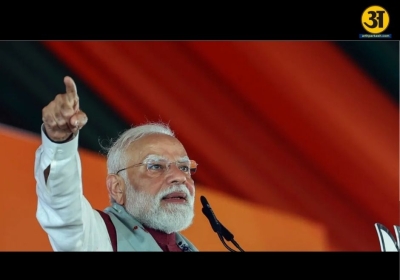
Now, as Prime Minister Narendra Modi prepares to visit China for the Shanghai Cooperation Organisation (SCO) summit, the two countries are stepping up talks. Chinese Foreign Minister Wang Yi is in New Delhi to meet PM Modi, National Security Advisor Ajit Doval, and External Affairs Minister S Jaishankar. The visit is being seen as part of the effort to put ties back on track.
But what exactly have India and China done since 2020 to normalise relations?
Military and diplomatic talks to reduce tensions
The first major step after the Galwan clash was military dialogue. Since June 2020, India and China have held over 21 rounds of Corps Commander Level talks. These are high-level meetings between senior officers of the Indian Army and China’s People’s Liberation Army (PLA). The aim was simple—reduce tensions, prevent clashes, and create a peaceful environment along the Line of Actual Control (LAC).
Through these talks, troops were pulled back from some flashpoints, including Pangong Lake, Galwan, and Gogra-Hot Springs. This helped reduce the risk of another violent incident. However, disagreements remained in some areas, especially Depsang Plains and Demchok, which continued to be sensitive points until very recently. By early 2025, both sides announced that disengagement had finally been completed in these areas too.
Apart from military-level dialogue, the Working Mechanism for Consultation and Coordination (WMCC) meetings also played a role. WMCC was set up in 2012 to handle border management. After Galwan, it became an active platform where diplomats and defence officials from both sides could exchange information and ensure that tensions did not spiral out of control.
External Affairs Minister S Jaishankar and Chinese Foreign Ministers (first Wang Yi, later Qin Gang, and then again Wang Yi after leadership changes in Beijing) met on the sidelines of global events like SCO, G20, and BRICS. National Security Advisor Ajit Doval also held talks with Chinese officials under the Special Representatives’ dialogue framework.
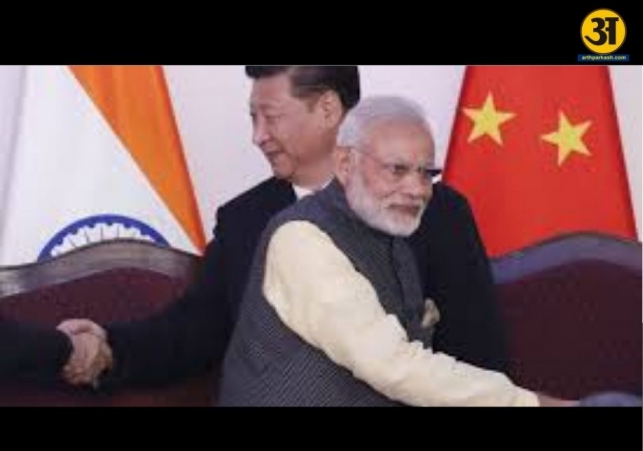
At the top level, Prime Minister Narendra Modi and President Xi Jinping met only twice after 2020. Their first meeting was an informal exchange at the G20 Summit in Bali in 2022. The real breakthrough came in October 2024 at the BRICS Summit in Russia, where the two leaders held their first formal talks in five years. These meetings signalled that both sides were willing to reopen political communication despite continuing mistrust.
Trade, tourism, and cautious cooperation
Interestingly, even while soldiers stood face-to-face in Ladakh, trade between India and China grew. By 2022, bilateral trade crossed USD 100 billion, though India’s trade deficit with China also widened to more than USD 75 billion.
India continued to import a large volume of goods from China, including electronics (like smartphones and LED TVs), chemicals, industrial machinery, and fertilisers. At the same time, Indian exports to China included cotton yarn, iron ore, gems and jewellery, seafood, and organic chemicals.
But tensions also left their mark. India banned several popular Chinese apps, such as TikTok, WeChat, and UC Browser, citing data security and sovereignty concerns. Still, on the economic front, the relationship remained strong because of the sheer size of bilateral trade.
Steps to rebuild people-to-people ties also began. In April 2025, after disengagement at the last friction points, the two countries decided to restart the Kailash Mansarovar Yatra, a pilgrimage route that had been suspended since 2020. Both sides also agreed to resume direct flight services, with officials currently working out the details.
Despite their differences, India and China continued to cooperate in global forums such as BRICS, SCO, and the G20, which gave them space to interact without letting bilateral tensions fully overshadow wider international cooperation.
ALSO READ: How opposition parties exploit voter dynamics while accusing others of manipulation
Final thoughts
The Galwan clash of 2020 was a turning point in India-China relations, pushing both sides into their worst crisis in decades. Since then, they have taken a series of careful steps to rebuild trust—military talks, diplomatic engagement, and limited political interactions at the highest level.
While tensions have not disappeared, disengagement at key border points and new agreements on trade, tourism, and flights show that both countries want to prevent relations from collapsing completely.
As PM Modi meets President Xi at the upcoming SCO summit, the world will be watching to see whether these efforts can finally move ties from fragile stability to genuine normalisation.
Related News